
Seasonal Species Directory for Abingdon
The following analyses explore the seasonal structure of wildlife and flowering plants recorded in Abingdon using long-term observational data and fitted seasonal ecology models.
Species were grouped according to similarity in their annual seasonal behaviour rather than by taxonomy or habitat alone. The resulting dendrograms, similarity heatmaps and ecological calendars reveal recurring seasonal patterns within the local ecological community, including spring emergence groups, summer assemblages, winter visitors and year-round resident structures.
These analyses are intended as exploratory ecological interpretations rather than strict biological classifications. The clusters and similarity relationships represent shared seasonal timing and detectability patterns derived from observational records across the year.
Birds, butterflies and flowering plants are analysed separately, allowing different forms of seasonality — migration, emergence, flowering and seasonal detectability — to be interpreted within their own ecological contexts.
Bird Seasonal Ecology
The bird seasonal ecology analysis reveals a strongly structured annual community organised around migration, winter visitation and varying forms of resident seasonal detectability.
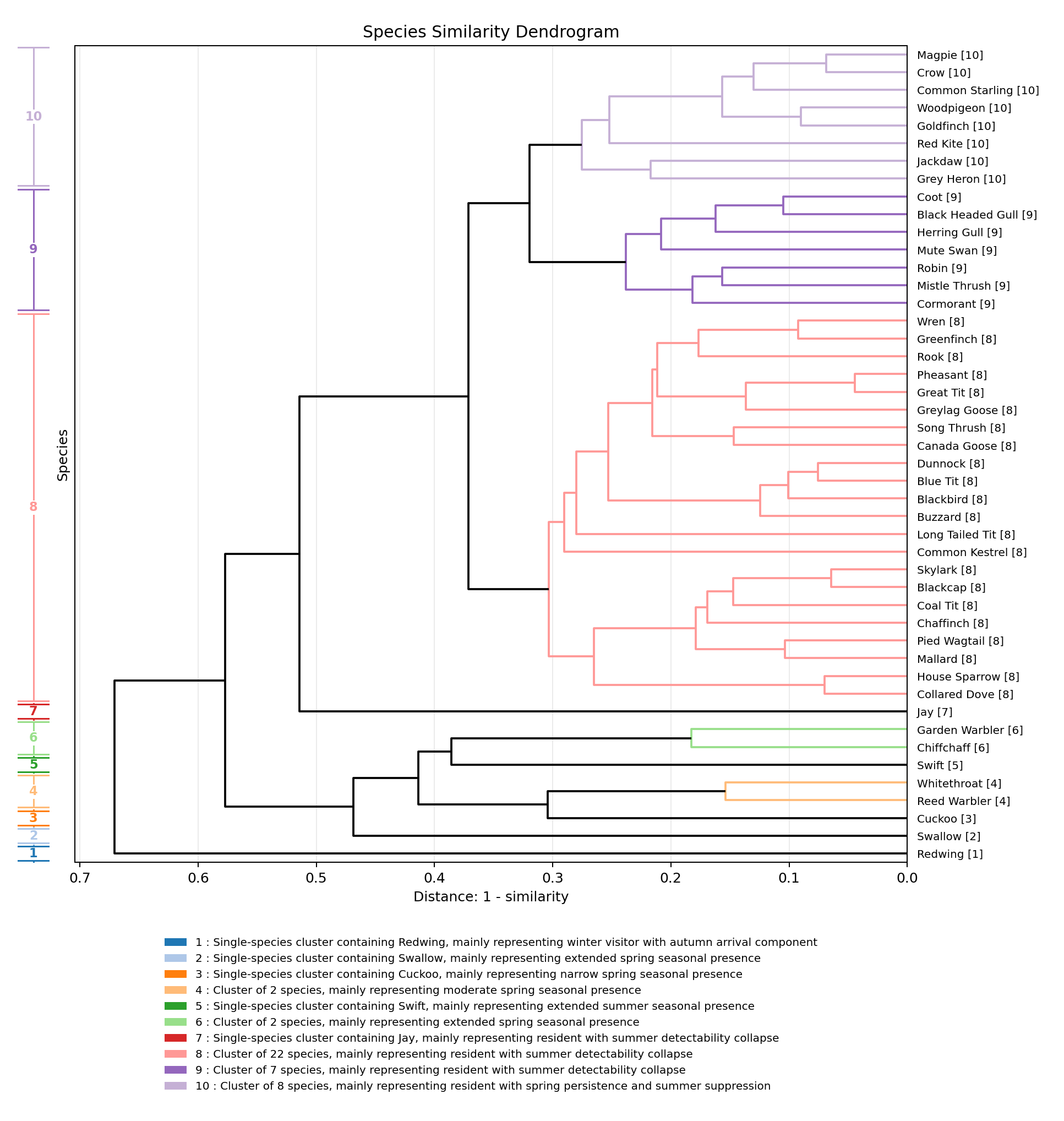
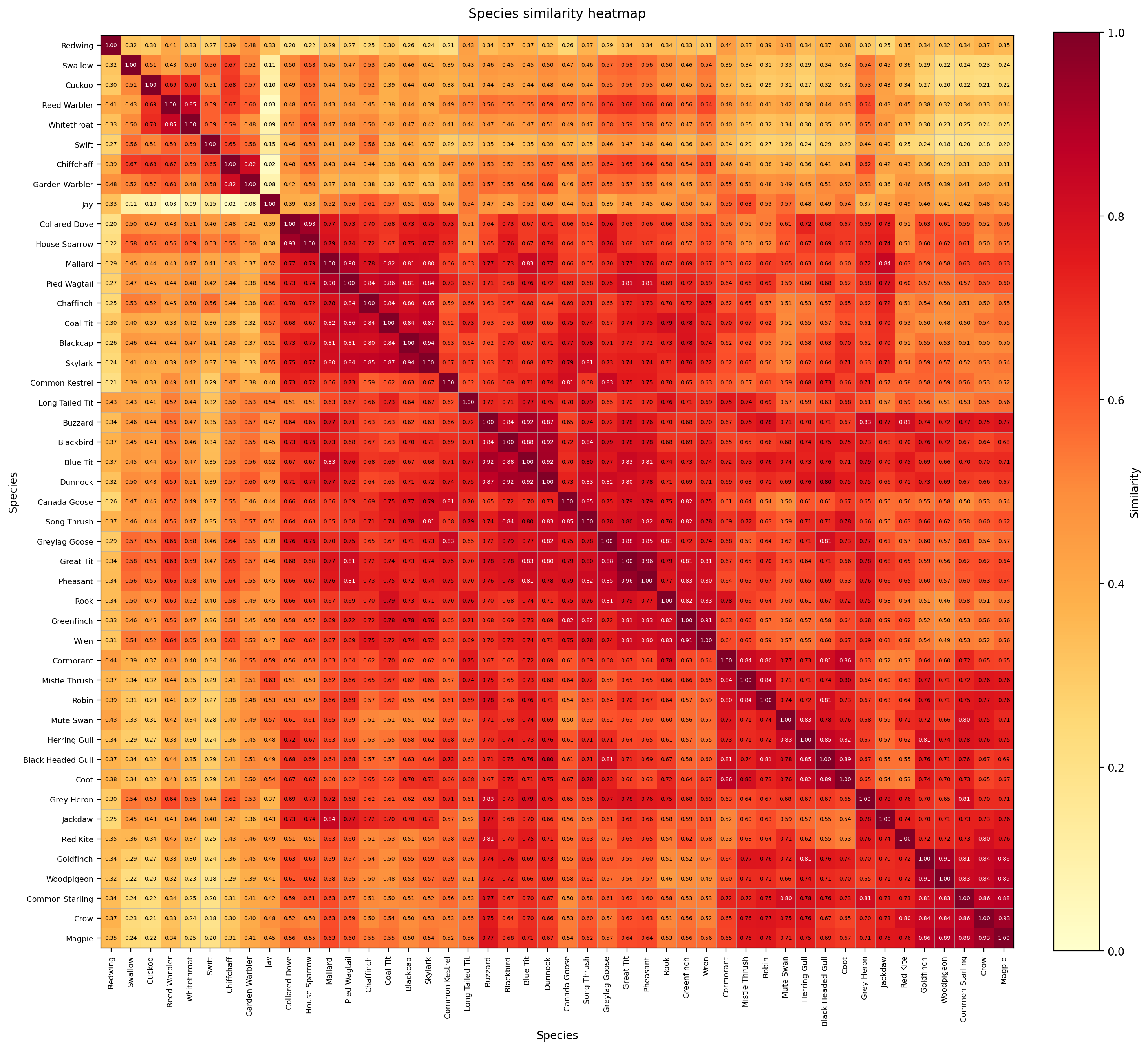
The dendrogram and similarity heatmap show several distinct ecological neighbourhoods. At one extreme are highly seasonal migrant species such as Redwing, Swallow, Cuckoo and Swift, each forming isolated or weakly connected clusters due to their narrow or strongly directional seasonal presence patterns.
Redwing forms the most distinct seasonal cluster, characterised by strong winter presence combined with autumn arrival behaviour. Cuckoo similarly appears as a narrow spring seasonal specialist, while Swift represents a highly concentrated summer assemblage with rapid seasonal expansion and decline.
In contrast, much of the Abingdon bird community occupies broad resident seasonal clusters. These species remain present throughout much of the year but differ in the degree and timing of seasonal detectability collapse, breeding-season persistence and winter enhancement.
Two major resident structures emerge:
- A resident group with strong summer detectability suppression
- A more persistent resident assemblage maintaining elevated spring presence before gradual summer decline
These broad resident neighbourhoods include many familiar urban and farmland species such as tits, thrushes, corvids, gulls and waterbirds. The similarity relationships suggest that shared seasonal behaviour often transcends habitat boundaries, linking species through common annual rhythms rather than ecological niche alone.
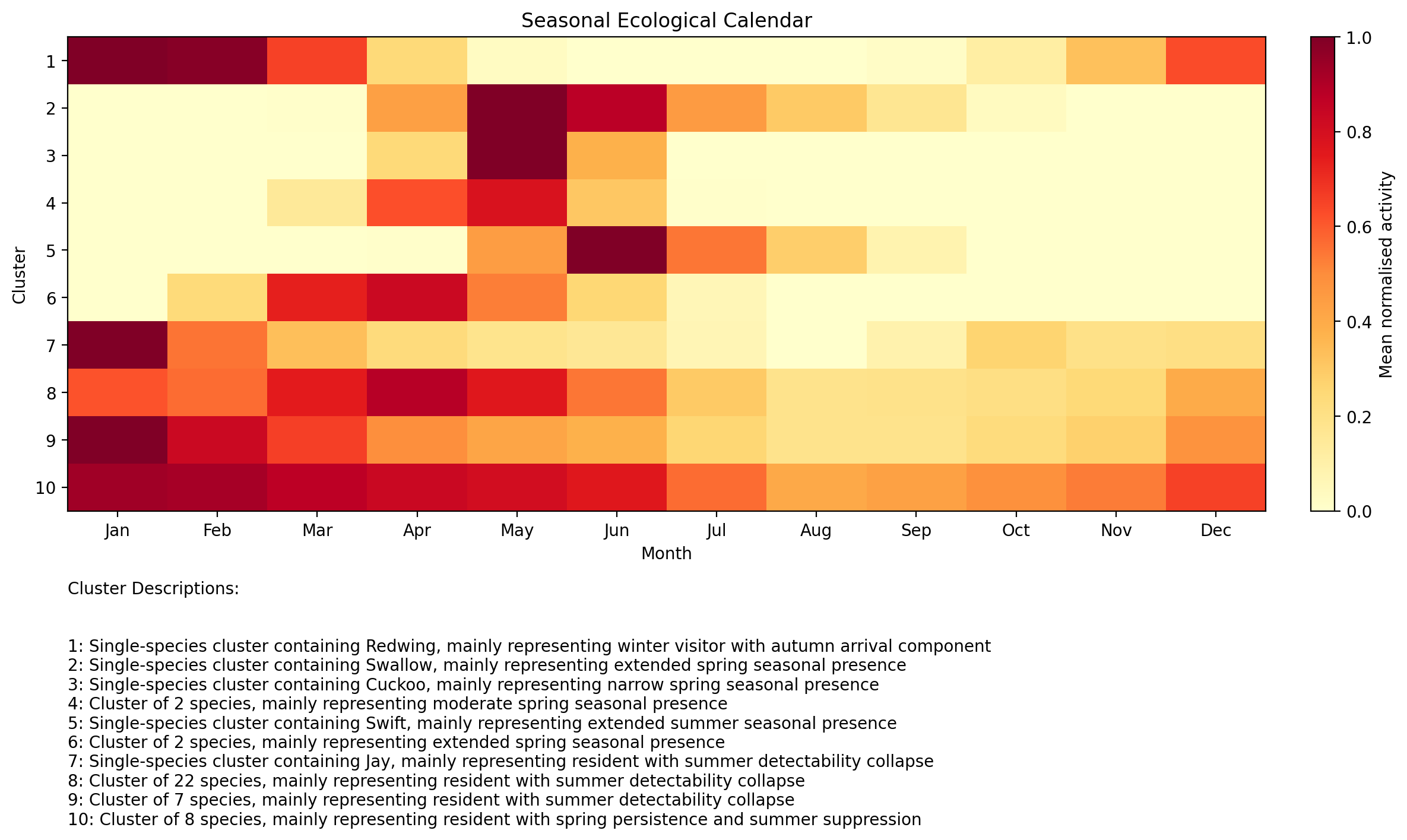
The ecological calendar highlights the overall annual transition of the bird community:
- Winter visitor dominance in midwinter
- Rapid spring expansion through March–May
- Concentrated summer seasonal peaks among migrants
- Followed by late-summer detectability collapse and autumn reorganisation
Rather than forming a simple migrant-versus-resident divide, the Abingdon bird community appears structured as a continuum of overlapping seasonal strategies.
Butterfly Seasonal Ecology
The butterfly seasonal ecology analysis reveals a comparatively compact but strongly seasonal community structured primarily around emergence timing and duration of summer activity.
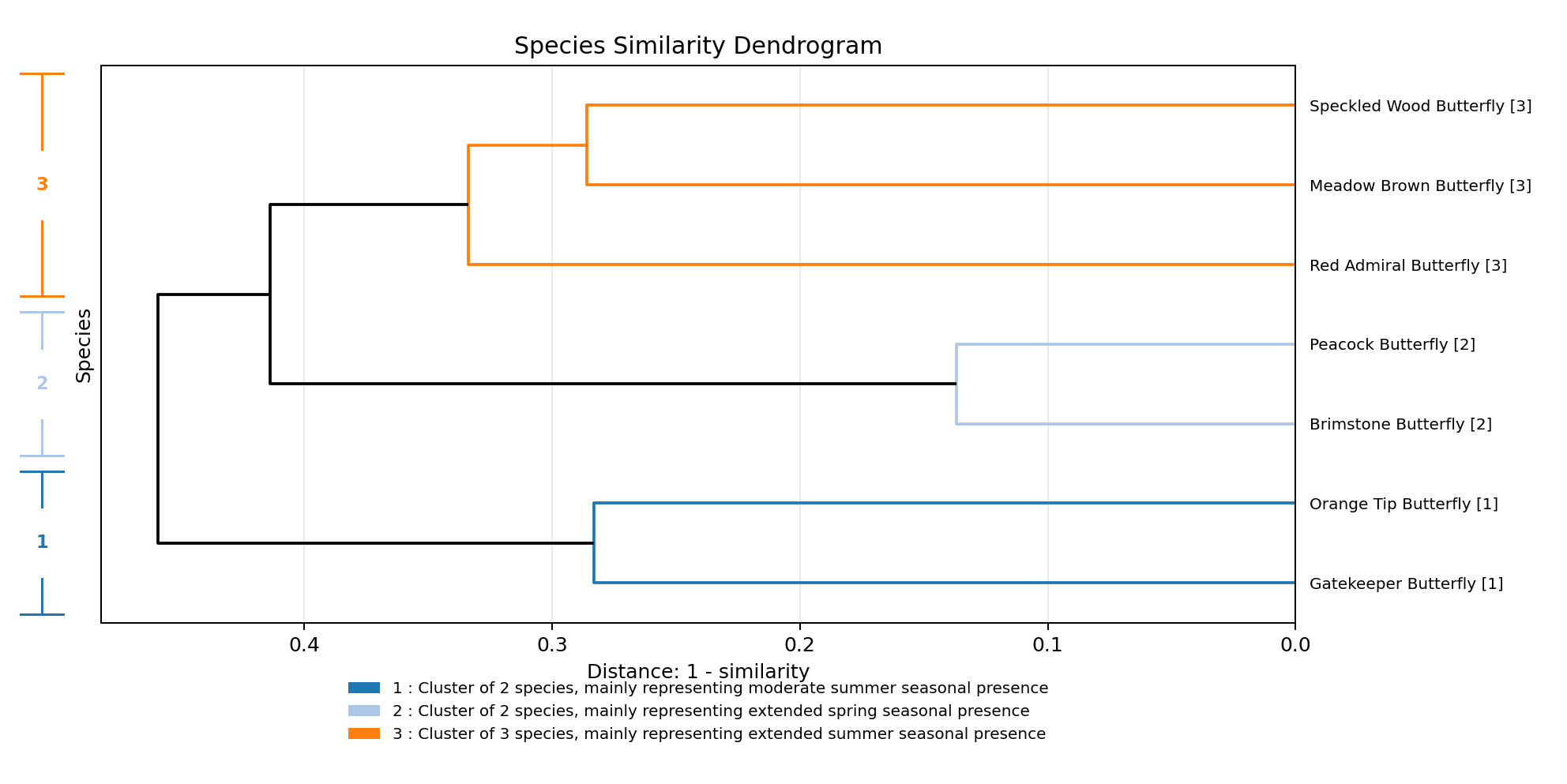
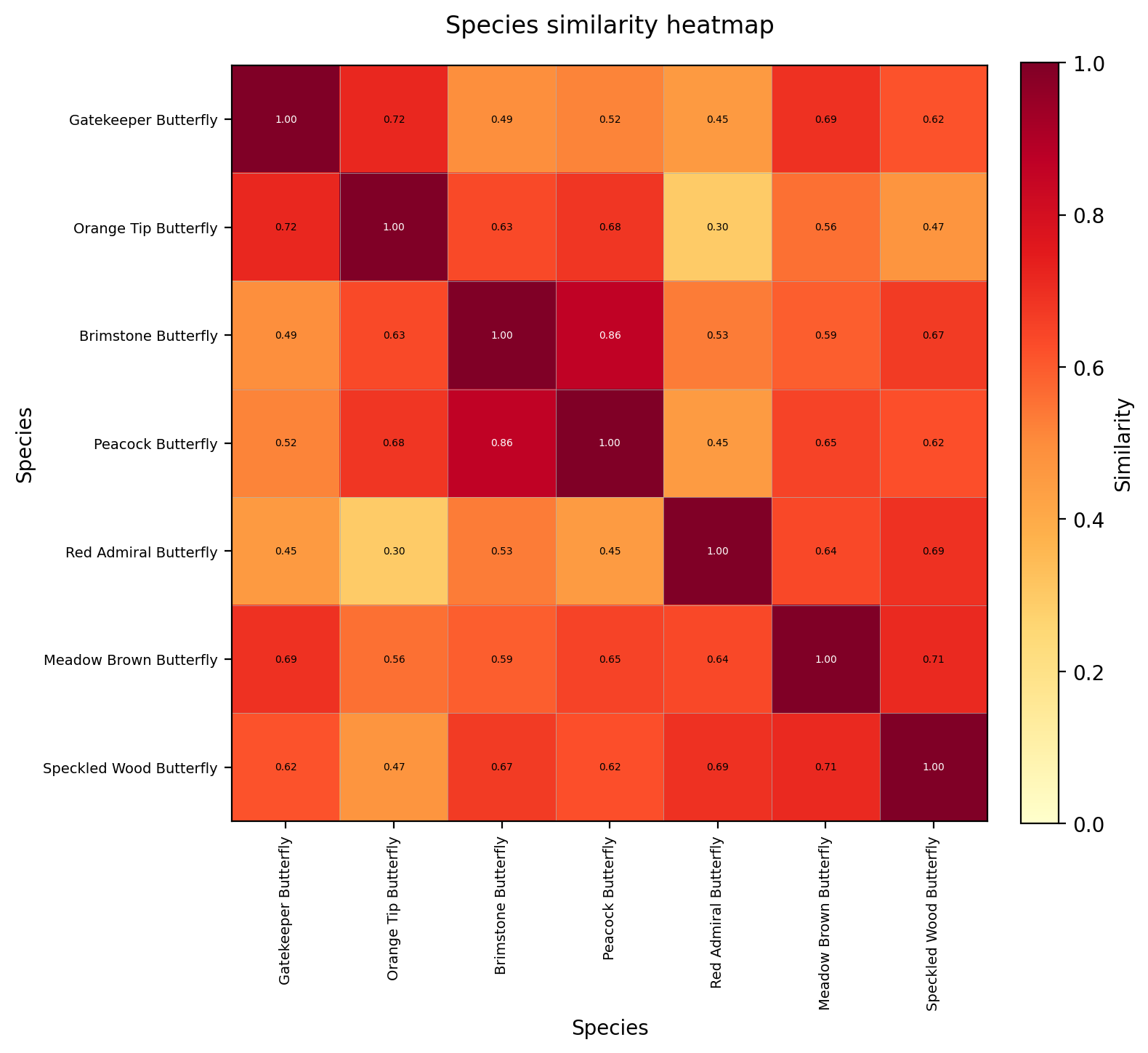
Unlike the bird assemblages, which are dominated by complex resident and migratory behaviours, the butterfly clusters form clear phenological bands associated with spring emergence, extended summer presence and late-summer persistence.
Three principal seasonal neighbourhoods emerge.
The first consists of Gatekeeper and Orange Tip, representing comparatively narrow seasonal presences associated with concentrated emergence periods. Orange Tip is especially spring-focused, while Gatekeeper occupies a more restricted midsummer window.
A second cluster links Brimstone and Peacock, both of which exhibit extended spring seasonal persistence and broad early-season activity. Their strong similarity reflects prolonged detectability across much of spring and early summer.
The third and broadest grouping contains Red Admiral, Meadow Brown and Speckled Wood. These species represent extended summer seasonal presence, maintaining activity across much of the summer and early autumn period.
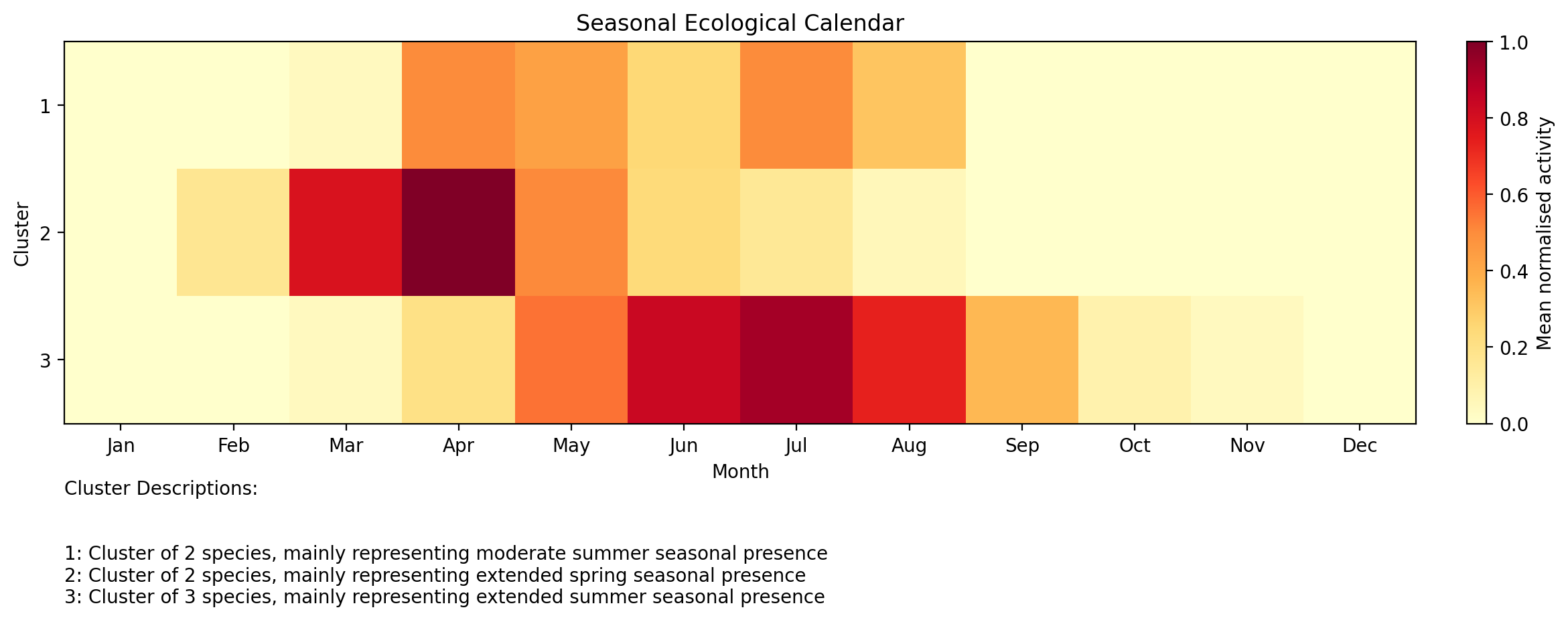
The ecological calendar reveals a progressive seasonal succession:
- Early spring emergence dominated by Brimstone and Peacock
- Expansion into late spring and midsummer assemblages
- Followed by broad summer persistence among Meadow Brown, Speckled Wood and Red Admiral
Compared with the bird assemblages, butterfly seasonal structure appears more tightly compressed into the warmer months of the year, producing clearer and more coherent seasonal neighbourhoods.
Flora Seasonal Ecology
The flowering plant seasonal ecology analysis reveals a strongly ordered progression of flowering activity across the year, forming one of the clearest examples of seasonal ecological succession within the Abingdon dataset.
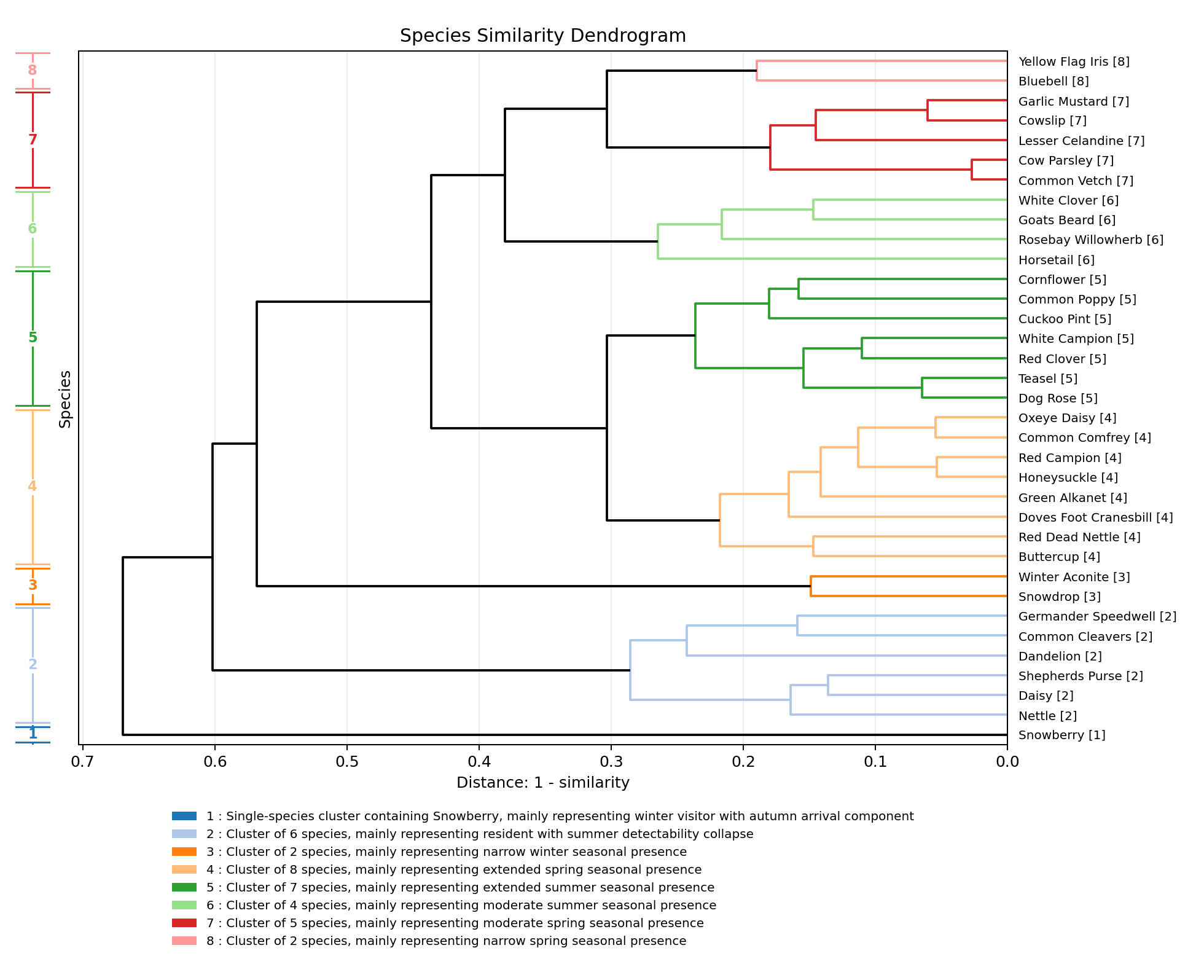
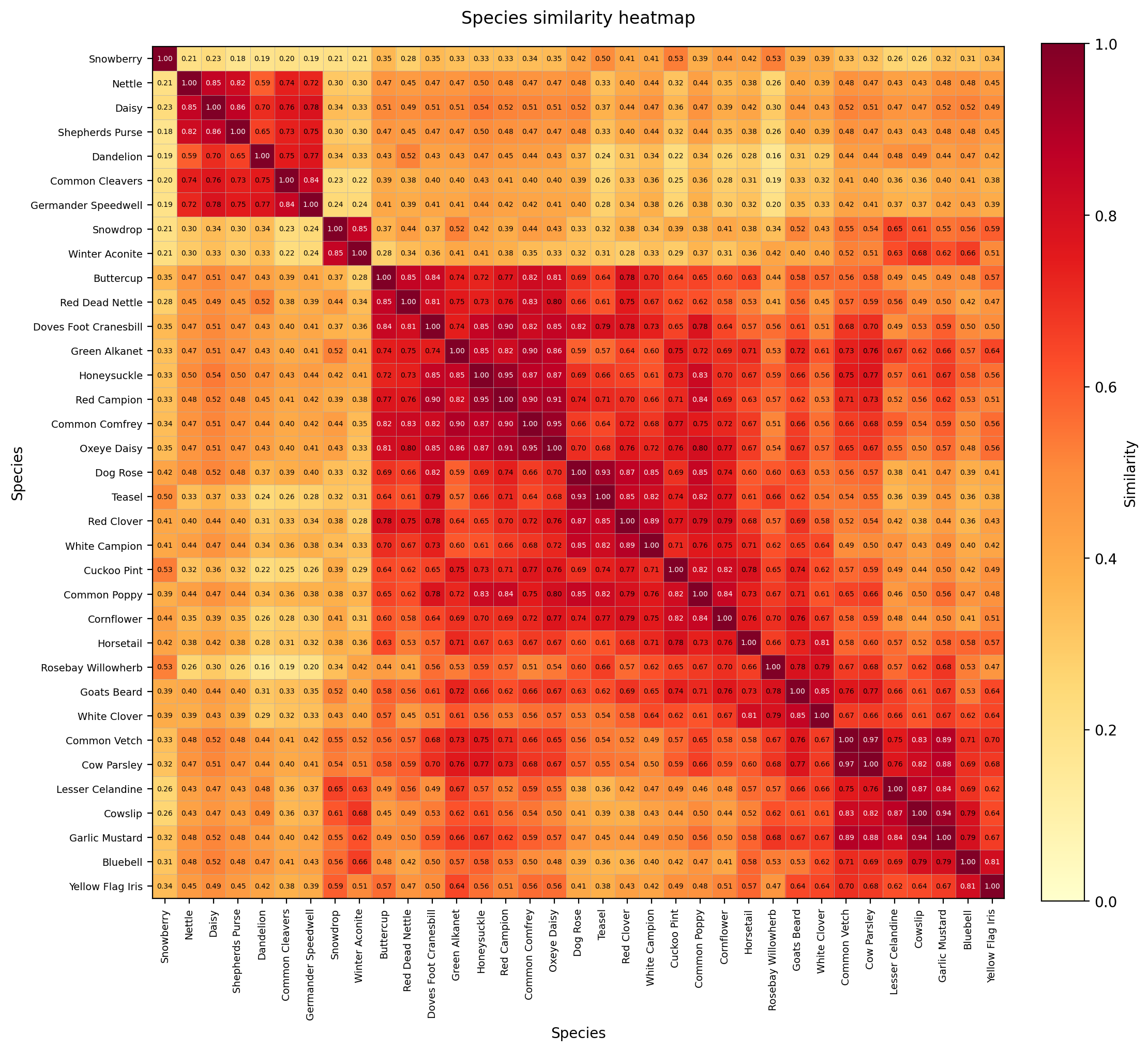
The dendrogram separates species into several coherent flowering assemblages associated with winter emergence, spring pulse flowering, extended summer persistence and late-season continuation.
At one extreme are highly seasonal early-flowering species such as Snowdrop and Winter Aconite, forming narrow winter and very early spring clusters. These species are among the earliest ecological signals of seasonal transition within the yearly cycle.
A large spring assemblage follows, containing species such as Lesser Celandine, Cowslip, Garlic Mustard and Bluebell. These species produce the strongest spring flowering pulse within the dataset and form a coherent seasonal neighbourhood associated with woodland edges, verges and disturbed habitats.
The summer assemblages become progressively broader and more interconnected. Species such as White Campion, Red Clover, Teasel, Common Poppy and Cornflower form extended summer flowering networks maintaining persistence through June, July and August.
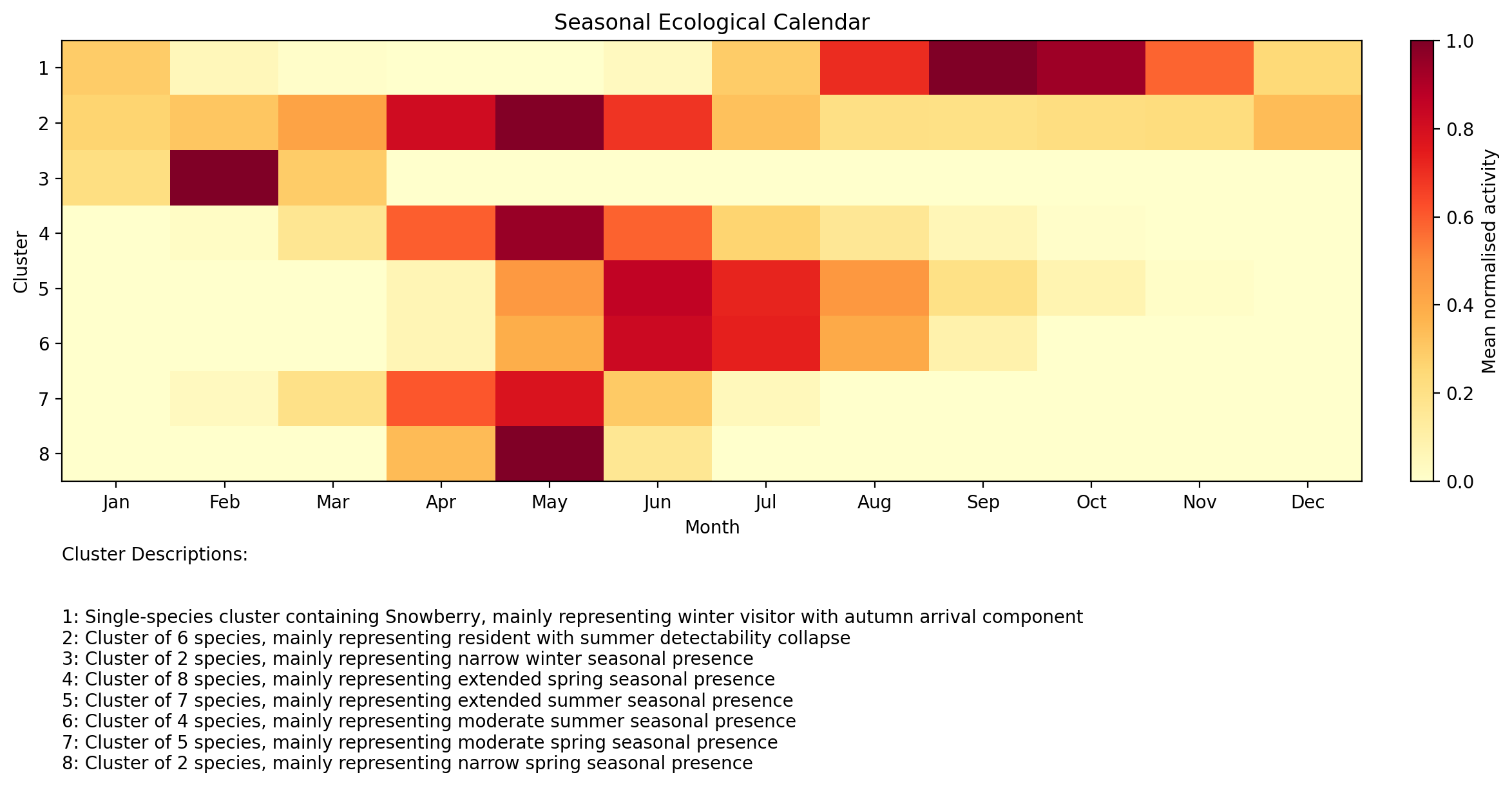
The ecological calendar reveals a continuous seasonal relay:
- Winter emergence
- Rapid spring expansion
- Midsummer flowering saturation
- Followed by gradual autumn decline
Unlike the bird community, which is heavily shaped by migration and changing detectability, the flora assemblages form a comparatively smooth temporal gradient, with neighbouring clusters often representing successive flowering waves rather than sharply separated ecological states.
The similarity heatmap further suggests that flowering overlap creates a highly interconnected seasonal network across much of the summer flora community.
The Ecological Year of Abingdon
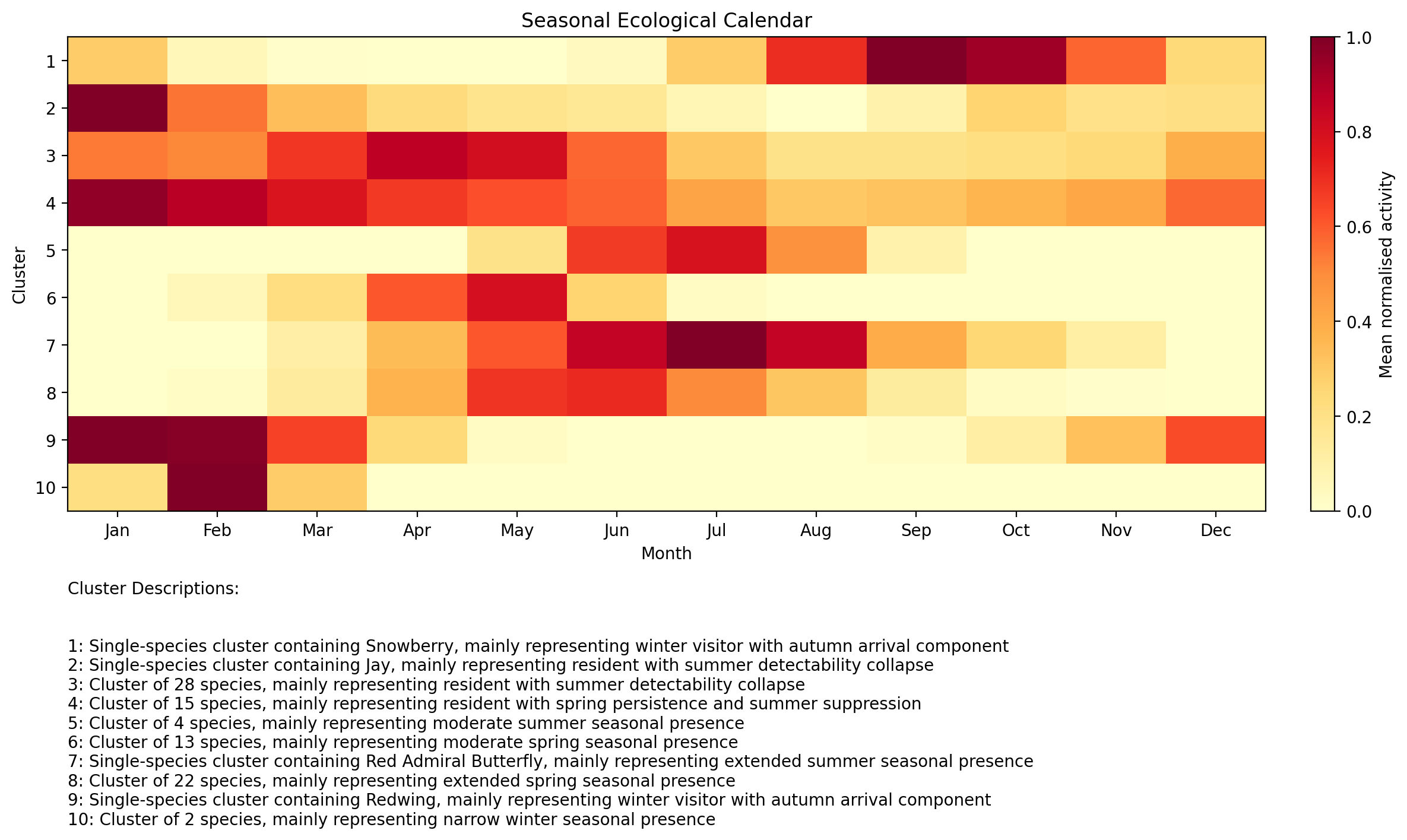
When birds, butterflies and flowering plants are analysed together, a broader seasonal ecological structure emerges across the Abingdon landscape.
Rather than clustering primarily by taxonomy, many species group according to shared seasonal timing and persistence. Winter-flowering plants, winter visitors and early spring species form coherent seasonal neighbourhoods, while summer butterflies, flowering plants and migratory birds converge into broad midsummer assemblages.
The resulting ecological calendar reveals the year as a sequence of overlapping seasonal waves:
- Winter contraction and persistence
- Rapid spring ecological expansion
- Midsummer saturation
- Gradual autumn simplification
Several clusters combine species from different biological groups that nonetheless occupy similar positions within the annual ecological cycle. Early spring flora, migrant warblers and spring butterflies, for example, appear within closely related seasonal neighbourhoods associated with the expanding spring landscape.
The analysis suggests that the seasonal ecology of Abingdon is organised less by strict taxonomic divisions than by shared participation in recurring annual ecological phases.
Browse by group
These species accounts are generated from the author's own long-term wildlife records and are intended as interpretive summaries of seasonal pattern rather than formal survey outputs.