Seasonal Analysis and Species Classification
Herring Gull
Model Family : Resident detectability



Summary
Herring Gull
Resident with summer detectability collapse
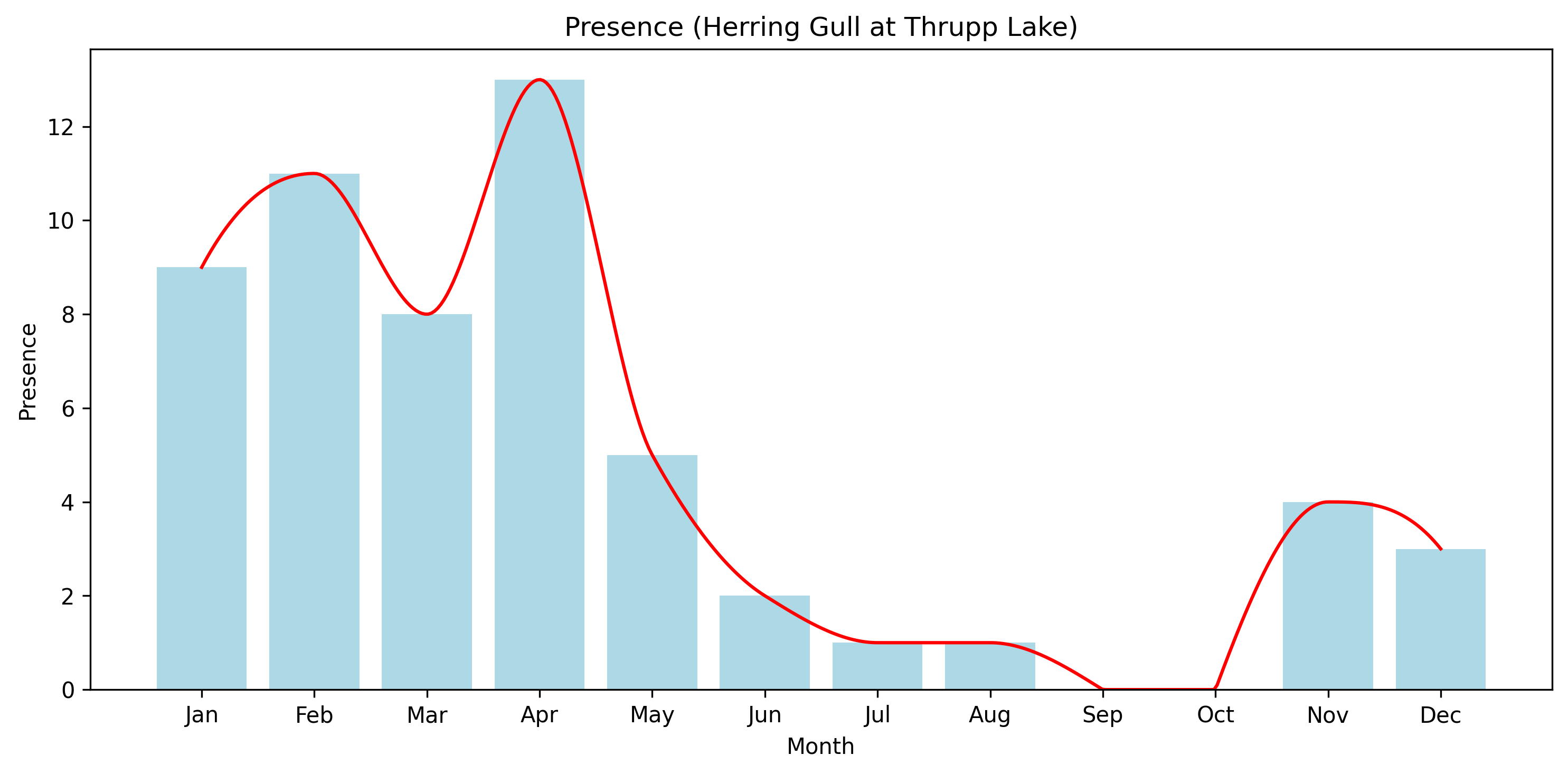
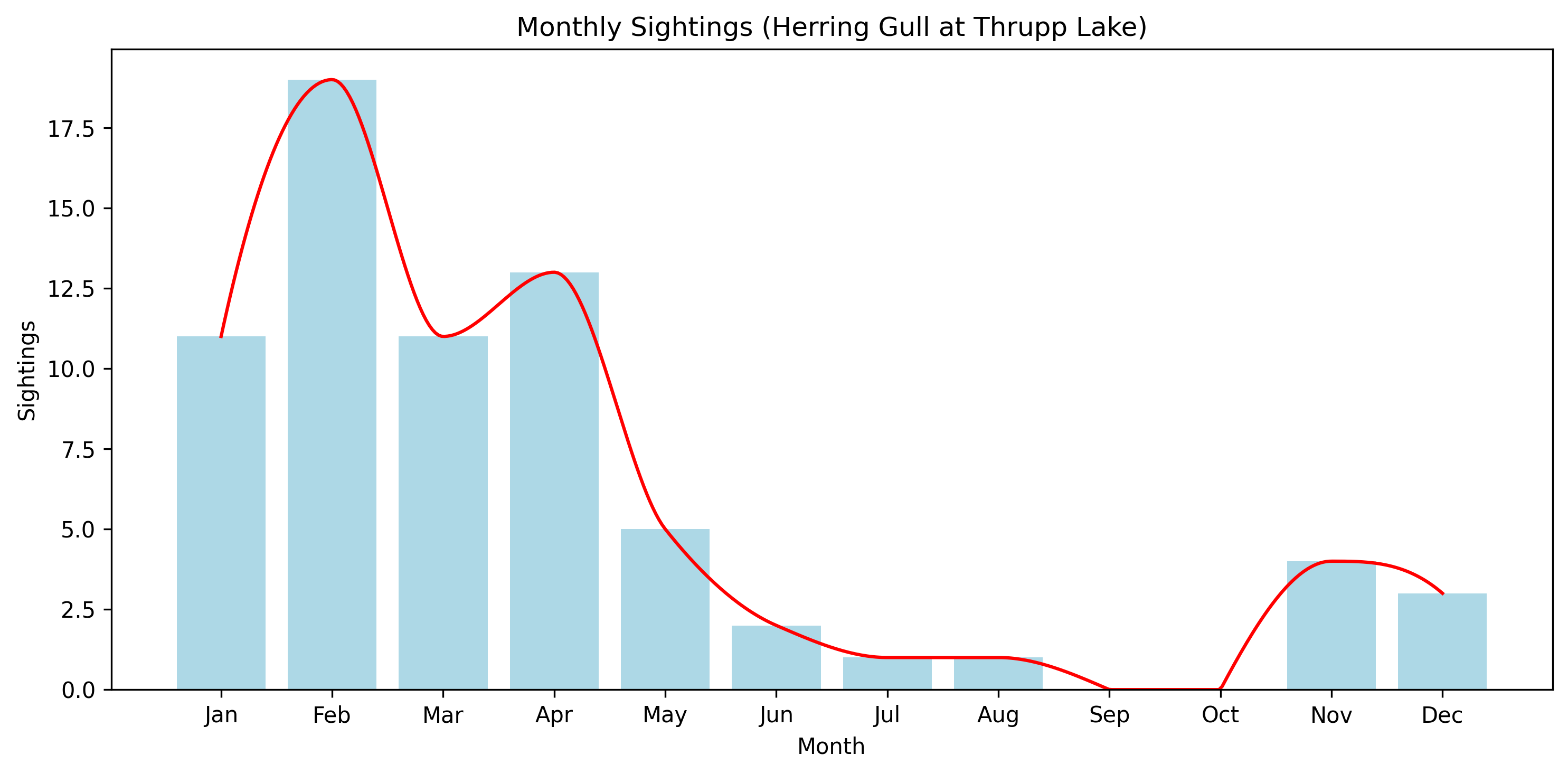
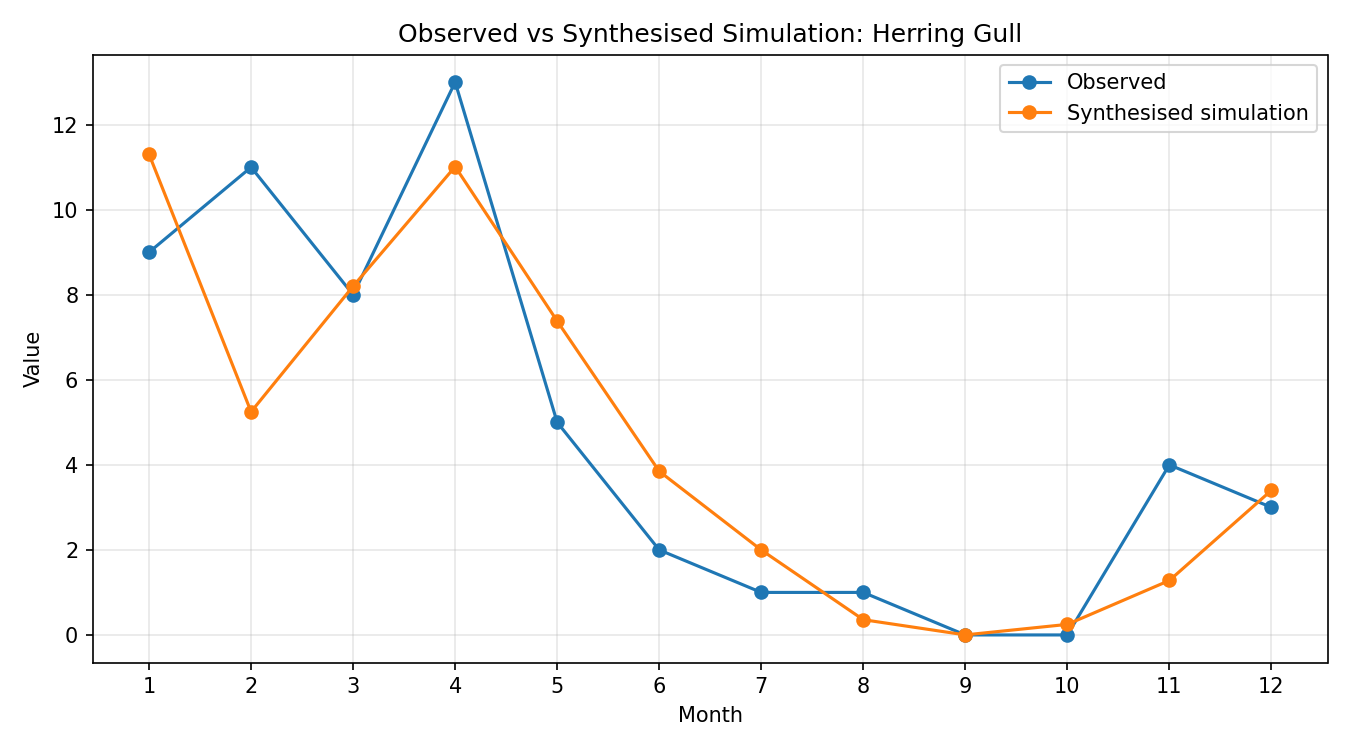
Herring Gull is classified as resident with summer detectability collapse. The fitted resident detectability target peaks around April and reaches its lowest point around September. The model indicates weak baseline presence, weak spring carry-over, strong pre-summer retention, moderate summer suppression, and moderate summer decay acceleration.
- Confidence
- Medium
- Fit score
- 0.217
- Peak detectability
- April
- Lowest detectability
- September
Seasonal wheel
Calendar strip
Jan
0.09
Feb
0.11
Mar
0.32
Apr
0.52
May
0.26
Jun
0.11
Jul
0.09
Aug
0.03
Sep
0.0
Oct
0.0
Nov
0.06
Dec
0.17
Highlighted months indicate stronger modelled presence or detectability. A ring marks the fitted peak; a hollow mark indicates the trough where available.
Classification evidence
- Target peak month
- 4
- Target peak label
- April
- Target trough month
- 9
- Target trough label
- September
- Target peak value
- 0.517
- Target trough value
- 0.0
- Target mean value
- 0.146
- Target amplitude
- 0.517
- Baseline to peak ratio
- 0.091
- Autumn to winter weight ratio
- 0.063
- Year end to winter weight ratio
- 0.327
- Decay to growth ratio
- 1.333
Observed and Simulated Seasonal Patterns