
Seasonal Ecological Calendars
The neighbourhood structures can also be aggregated temporally to produce seasonal ecological calendars using the following workflow:
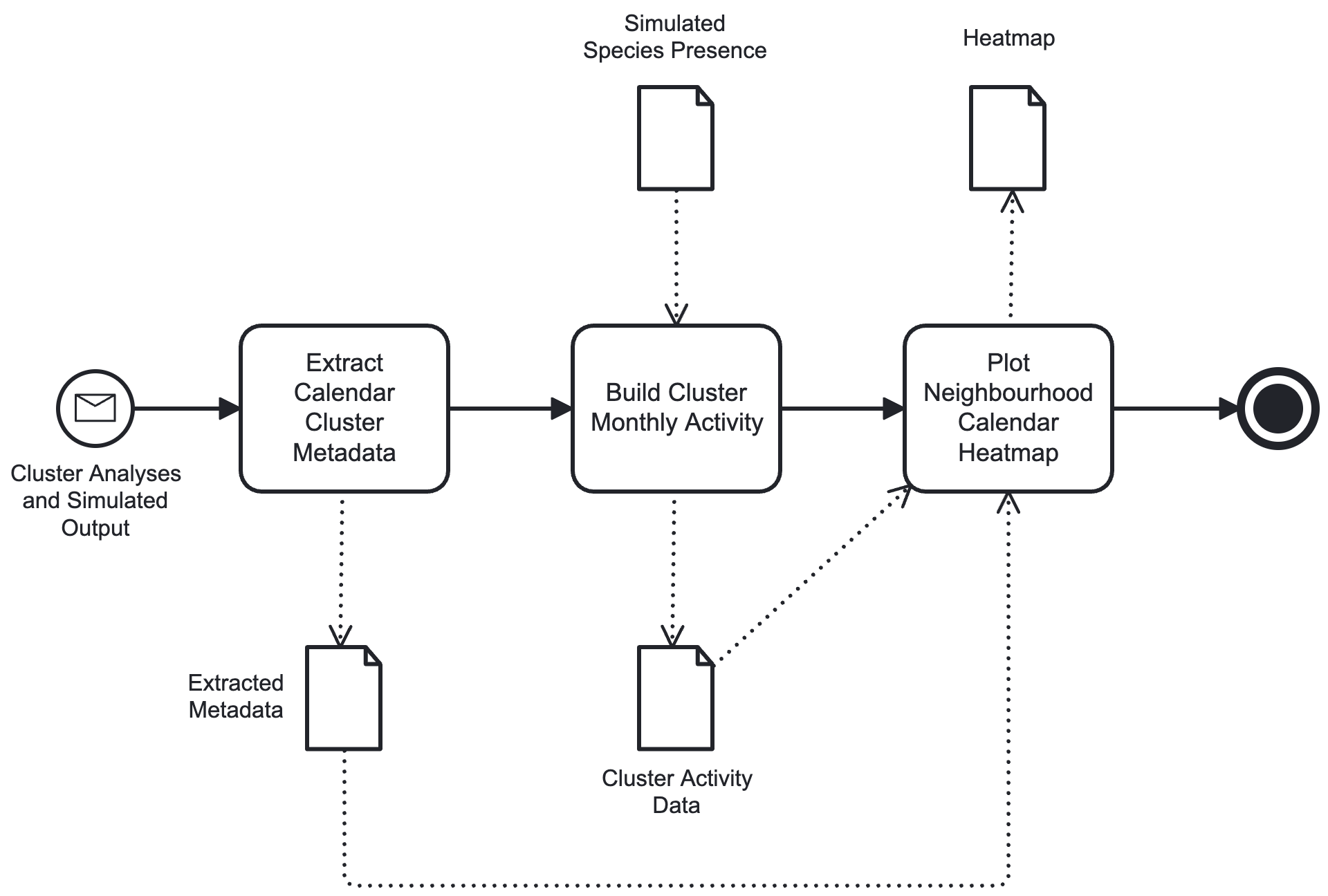
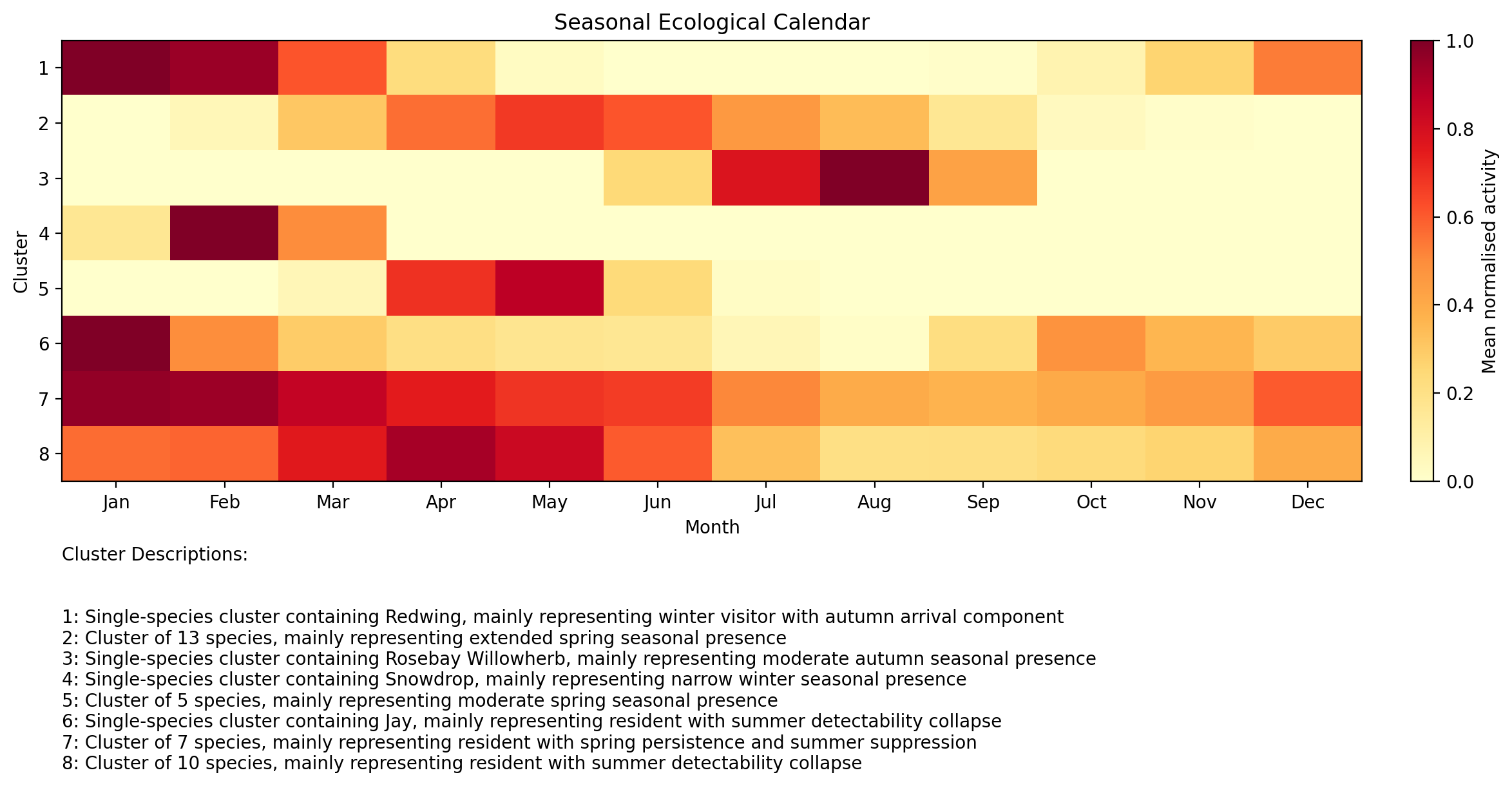
These calendars summarise the mean normalised activity of ecological neighbourhoods through the year, allowing broader community-scale seasonal structure to be visualised directly.
Rather than focusing on individual taxa, they attempt to expose larger seasonal ecological modes, including:
- Winter visitor activity
- Spring flowering and emergence periods
- Resident detectability dynamics
- Extended summer assemblages
- Autumn transitional structure
The resulting heatmaps provide a view of how different regions of seasonal ecological space become active, overlap, and decline through the ecological year:
Toward a Seasonal Ecology of Place
These models do not attempt to explain ecosystems in full. Instead, they provide a way of describing seasonal ecological structure using a common mathematical language. In doing so, they allow long-term observational records to be explored not only as individual species histories, but as components of a larger seasonal ecological system.
Tool
ODE Solver
A simple tool for exploring time-based models
The seasonal presence and detectability models were developed using a small, general-purpose ordinary differential equation solver, designed for experimentation and visualisation.
It allows simple systems to be defined and explored over time, making it possible to test how patterns might arise from underlying processes.
The application, the models, and instructions on how to run them are provided in the GitHub repository.